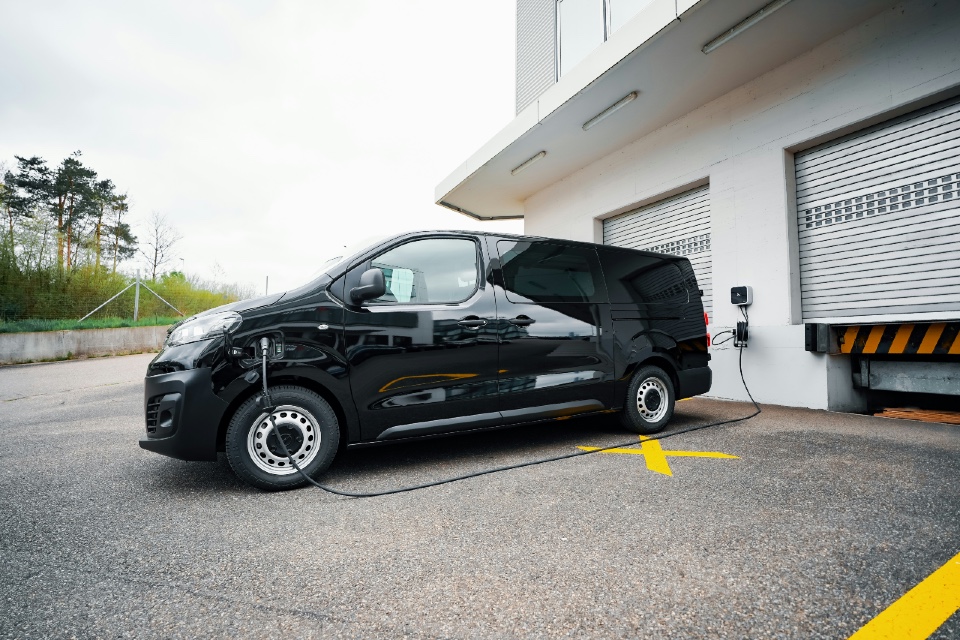









Installing EV charging infrastructure solves one challenge for fleet operators. Using it efficiently creates another. As explored in our earlier Fleet EV Charging Infrastructure: What Fleet Managers Should Compare buyer’s guide, charging strategies should be designed around how vehicles actually operate rather than starting with the chargers themselves. Once that model is established, fleet managers need to answer a more operational question: Where and when should each vehicle charge to minimise cost without affecting its ability to do the job?
Depot, home and public charging can all have a role. But the cost and operational implications can be very different. Effective fleet charging therefore requires operators to manage location + timing + energy price + vehicle requirement + charging data together.
Establish a Charging Hierarchy
Rather than allowing drivers to charge wherever is most convenient at the time, fleets can establish a preferred charging hierarchy.
For some fleets, this might be:
Depot charging → home charging → public charging
For others, home charging may be the primary option.
The correct hierarchy depends on vehicle operating patterns, but establishing one helps avoid unnecessary use of more expensive charging options.
Fleet Charging Principle
The cheapest charging strategy is not necessarily about finding the cheapest charger. It is about directing each vehicle towards the most appropriate charging option before it needs energy.
Understand the True Cost of Each Charging Location
Fleet managers should establish comparable costs across their charging estate.
That means understanding:
- Depot electricity costs
- Home charging reimbursement
- Public charging tariffs
- Subscription charges
- Network fees
- Charging-management costs
A public rapid charger may be invaluable when a vehicle needs energy during a working day, but routinely relying on rapid charging where overnight depot or home charging was possible can undermine EV operating-cost savings.
Providers including bp Fleet Solutions, Octopus Fleet, Rightcharge and VWFS Fleet offer different combinations of charging, payment and fleet services designed to help businesses manage EV charging across multiple locations.
Make Depot Charging Work Harder
For depot-based fleets, returning vehicles create an opportunity to control both where and when charging takes place.
But simply plugging every vehicle in at the end of a shift may create a significant demand peak.
The better question is:
When does each vehicle actually need to be ready?
A van arriving at 5pm but not leaving again until 7am may have 14 hours available for charging.
Charging software can potentially schedule that demand across the available window rather than immediately drawing maximum power.
Platforms from providers such as Fuuse, vaylens and Mer Fleet Services support different aspects of charge-point management and fleet charging.
Use Smart Charging to Manage Demand
Smart charging can coordinate charging according to factors such as:
- Vehicle departure time
- Required state of charge
- Electricity price
- Site demand
- Charger availability
- Grid capacity
This can help fleets avoid treating every connected vehicle as an urgent charging requirement.
Consider ten vehicles returning simultaneously.
They may all need electricity.
They may not all need it now.
Charging Insight
The important question isn’t “Is the vehicle plugged in?” It is “When does the vehicle need to be ready?”
That distinction creates much of the flexibility available in fleet EV charging.
Take Advantage of Off-Peak Electricity
Where electricity contracts provide cheaper periods, charging can potentially be shifted towards lower-cost windows.
Fleet managers should examine how vehicle dwell times overlap with tariff periods.
This is particularly relevant for vehicles parked:
- Overnight at depots
- Overnight at employees’ homes
- For predictable periods between shifts
Energy providers such as Drax Energy Solutions can form part of the wider conversation around electricity procurement, infrastructure and managing commercial energy demand.
However, tariff optimisation should never compromise operational readiness.
A cheap kWh is not useful if the vehicle does not have enough charge to complete its route.
Set Charging Targets Around Operational Need
Not every vehicle needs to leave with a 100% battery every day.
A vehicle expected to cover 50 miles tomorrow may require considerably less energy than one scheduled for 180 miles.
Where vehicles and charging platforms permit, charging requirements can therefore be aligned more closely with:
- Planned mileage
- Route
- Payload
- Weather
- Available destination charging
- Contingency requirements
This can reduce unnecessary charging demand while ensuring vehicles have sufficient operational range.
The principle is simple:
Charge for the job the vehicle needs to do.
Make Home Charging Easy to Administer
For company vehicles kept at employees’ homes, domestic charging can provide a convenient and potentially cost-effective option.
But it creates administrative questions.
Fleet operators need to determine:
- How business charging is identified
- How drivers are reimbursed
- Which electricity rate is used
- Whether dedicated chargers are required
- How charging data is collected
Solutions from Rightcharge, Octopus Fleet and other fleet-charging providers can help businesses manage elements of home charging and reimbursement.
A good home-charging process should work for both sides.
Drivers should not be left funding business electricity indefinitely, while fleet teams need reliable evidence of what they are reimbursing.
Treat Public Charging as Part of the Network
Public charging is sometimes described as something fleets should avoid because of cost.
That is too simplistic.
For vehicles covering long distances or operating unpredictably, public charging may be essential.
The objective should be to use it deliberately rather than accidentally.
Fleet managers can consider:
- Preferred networks
- Driver payment methods
- Tariff visibility
- Rapid versus slower charging
- Route planning
- Consolidated billing
Providers such as bp Fleet Solutions, Toyota GB and VWFS Fleet operate within the wider fleet and mobility ecosystem where access to charging and simplified driver administration can be important.
Avoid Emergency Charging
One of the most expensive charging behaviours can result from poor planning.
A driver begins the day without enough energy, then needs a rapid charge during working hours.
The direct cost may be higher, but there can also be an operational cost:
Driver time + vehicle downtime + charging cost
Better overnight charging, route planning and visibility of vehicle state of charge can reduce these unplanned stops.
This is why charging optimisation should not focus exclusively on pence per kWh.
Bring Charging Data Together
Mixed charging creates fragmented information.
A single vehicle might charge:
Monday: depot
Tuesday: home
Wednesday: public network
Thursday: depot
Without consolidated data, fleet managers may struggle to understand the true energy cost of operating that vehicle.
Useful information includes:
- kWh consumed
- Charging location
- Cost
- Time of charge
- Vehicle
- Driver
- Charger
- Public network
Genie Insights, alongside charging-management specialists such as Fuuse and vaylens, illustrates the growing role of data and management platforms in understanding fleet and charging performance.
Measure Cost per Mile
Pence per kWh is useful, but it does not provide the complete picture.
Fleet managers can also monitor:
Energy cost per vehicle
and ultimately:
Energy cost per mile
This allows comparisons between vehicles, routes and charging strategies.
Unexpected differences may reveal:
- Excessive public charging
- Inefficient vehicles
- Poor charging behaviour
- Different route demands
- Reimbursement anomalies
Fleet Measurement Principle
Don’t just ask what electricity costs. Ask what it costs to move each vehicle a mile.
That connects charging directly with fleet operating performance.
Review Driver Charging Behaviour
Drivers have an important influence on charging cost.
Clear guidance can establish:
- Preferred charging locations
- When public charging should be used
- Which networks are preferred
- Whether vehicles should be plugged in on return
- How home charging is reimbursed
- What to do when charging fails
The aim should not be to discourage necessary charging.
It is to remove uncertainty so drivers can make decisions consistent with the fleet’s wider strategy.
A Practical Fleet EV Charging Cost Checklist
Fleet managers should ask:
- What is our preferred charging hierarchy?
- What does charging cost at depot, home and public locations?
- How much charging currently takes place through each channel?
- Can depot demand be shifted to cheaper periods?
- Are vehicles charging earlier or for longer than necessary?
- Can charging be matched to planned routes?
- Is home charging reimbursement accurate and simple?
- When should drivers use public charging?
- Can we reduce emergency rapid charging?
- Is charging data consolidated?
- What is the energy cost per vehicle and per mile?
- Are we reviewing charging behaviour regularly?
Frequently Asked Questions
Is depot charging cheaper than public charging?
It can be, particularly where fleets can access favourable commercial electricity rates and schedule charging effectively. Actual costs depend on tariffs, infrastructure and operational requirements.
Is home charging suitable for company fleets?
Yes, where vehicles are kept at employees’ homes and suitable charging arrangements can be installed. Fleets also need a reliable method of identifying and reimbursing business electricity use.
Should fleets avoid public EV charging?
Not necessarily. Public charging can be essential for longer or unpredictable journeys. The aim is to use it appropriately rather than relying on it unnecessarily where planned depot or home charging could meet the requirement.
How can fleets reduce EV charging costs?
Potential measures include smart charging, off-peak charging, better depot scheduling, appropriate home charging, reducing unnecessary rapid charging and using charging data to identify inefficient behaviour.
Product Guide
bp Fleet Solutions
Provides fleet energy, fuel and EV charging services, supporting businesses managing conventional and electric vehicles across their operations.
Website: https://www.bp.com/en_gb/united-kingdom/home/products-and-services/bp-fleet-solutions.html
Drax Energy Solutions
Provides renewable electricity, energy-management and decarbonisation solutions for UK businesses, including support around EV charging and wider commercial energy requirements.
Website: https://energy.drax.com/
Fuuse
EV charge-point management platform supporting workplace, depot and fleet charging, including charger management, energy control, payments and reporting.
Website: https://fuuse.io/
Genie Insights
Fleet technology and data specialist helping operators use vehicle information to improve fleet visibility, performance and decision-making.
Website: https://www.genieinsights.com/
Mer Fleet Services
Provides EV charging solutions and services supporting businesses and fleets with charging infrastructure and ongoing management.
Website: https://uk.mer.eco/
Octopus Fleet
Electric fleet specialist supporting businesses with EV leasing, charging, reimbursement and wider fleet-electrification requirements.
Website: https://octopusev.com/business
Rightcharge
EV charging platform supporting businesses with workplace and home charging, including charging reimbursement and management solutions.
Website: https://rightcharge.co.uk/
Sevadis
UK EV charging specialist providing charge points and charging solutions for commercial, workplace and fleet environments.
Website: https://sevadis.com/
Toyota GB
Vehicle manufacturer providing electric and electrified vehicles alongside wider fleet and mobility support for business customers.
Website: https://www.toyota.co.uk/business
vaylens
EV charging software platform supporting organisations with charge-point management, charging operations, billing and related services.
Website: https://www.vaylens.com/
VWFS Fleet
Volkswagen Financial Services’ fleet business, providing vehicle funding, fleet management and support for organisations transitioning towards electric mobility.
Website: https://www.vwfsfleet.co.uk/
From Charging Infrastructure to Charging Strategy
Installing charging infrastructure gives a fleet access to energy.
Optimising it determines what that energy costs.
The next stage of fleet electrification therefore involves connecting:
vehicle → journey → location → charger → tariff → data
For some fleets, depot charging will dominate. For others, employees’ homes will provide much of the energy. Public networks will remain essential for many operations.
The objective is not to force every vehicle into the same charging model.
It is to make the lowest-cost practical charging option the easiest option whenever operational circumstances allow.
The Fleet Summit connects senior fleet professionals with carefully selected suppliers through pre-arranged one-to-one meetings, providing an opportunity to explore EV charging, fleet electrification, energy management and wider fleet solutions.
Related Reading
This article follows our earlier Fleet EV Charging Infrastructure: What Fleet Managers Should Compare buyer’s guide, covering depot, workplace and home charging, charger selection, electrical capacity, software, scalability and supplier evaluation.
Together, the two articles move from designing EV charging around how the fleet operates to using that charging network as efficiently and cost-effectively as possible.
Image credit: https://unsplash.com/photos/a-man-in-a-suit-is-pumping-gas-into-a-car-HwjIQyTyG_s